
· OhMyVan Team · Solar · 10 min read
Best MPPT Charge Controller for a Camper Van
A 400 W van solar plan needs a 40 A MPPT. Compare three controllers that clear the calculator current and publish a maximum PV voltage.

- solar-panel
- mppt
- buying-guide
- sizing
- rv
Choosing an MPPT controller for a camper van starts with one question: how much charge current will your roof actually make? A 400 W array on a large van roof works out to about 28 A, so our calculator rounds up to a 40 A controller. Every controller below is rated at 40 A or higher, publishes its maximum PV voltage, and lists lithium support.
See our safety notes for details.
Quick picks for a 400 W van array
| Pick | Rated charge current | Maximum PV voltage | Best for |
|---|---|---|---|
| Victron SmartSolar 150/45 | 45 A | 150 V | A premium pick with app monitoring and voltage headroom |
| Renogy Rover Lite 60A | 60 A | 150 V | A larger array or a plan that may grow |
| EPEVER 40A MPPT | 40 A | 100 V | A budget build that matches the calculator size exactly |
The gear search link for this controller size is 40 A MPPT charge controller.
What does the 400 W van plan need from an MPPT?
The plan runs a compressor fridge, Starlink, a laptop, lights and phones for 2 days on a 560 Ah LiFePO4 bank. The array is 2 × 200 W, and the large-van roof caps it at 400 W. Our calculator’s charge current is 27.8 A, its required controller rating is 34.7 A, and its recommendation is 40 A. The controller branch is protected by a 50 A MIDI fuse and 8 AWG cable.
The diagram below shows how the controller sits in the rest of the system.
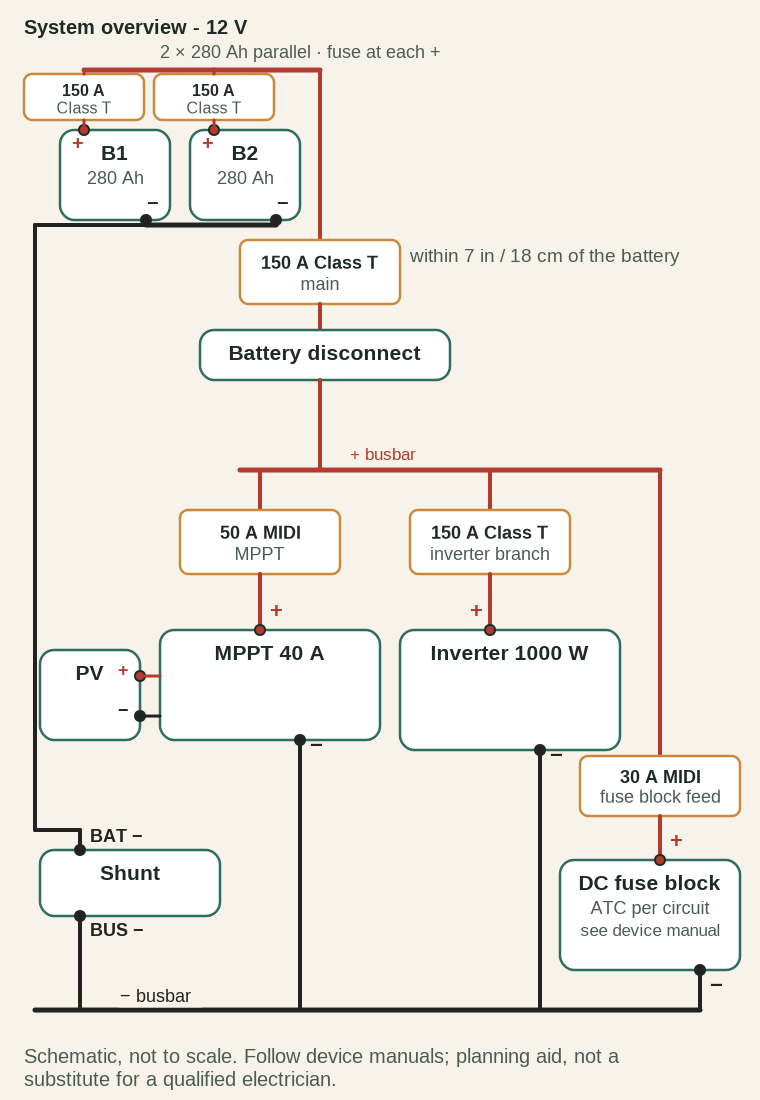
The diagram shows the 280 Ah battery pair, a 150 A Class T fuse at each battery positive, the 40 A MPPT with its 50 A MIDI fuse, and the separate 150 A Class T main fuse within 7 in of the battery.
A controller rated at 40 A covers this plan when its maximum PV voltage clears the array’s cold open-circuit voltage. That second number is the one buyers skip, and it is the one that decides whether the cold open-circuit voltage stays within the controller’s rating.
How were these controllers picked?
The shortlist starts with our calculator output, not with brand popularity. Each unit had to publish a charge current of 40 A or more, a maximum PV voltage, and lithium support on its Amazon listing. The check also looked for a real product page on amazon.com and a description that fits a 12 V van or RV solar system. No unit made the list on a guessed specification, and no price or rating was used to rank them.

The three picks cover different buying positions. One is premium and app-friendly, one has the most current headroom, and one matches the calculator size with the least voltage headroom. That last trade-off matters if you plan a long series string.
Victron SmartSolar 150/45: the premium pick
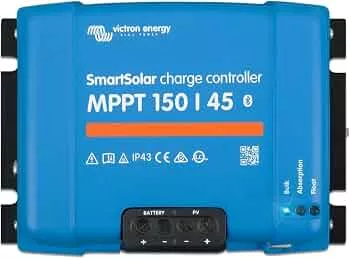
Victron SmartSolar 150/45
- 45 A rated charge current
- 150 V maximum PV voltage
- Built-in Bluetooth with VictronConnect
- 12 V nominal battery voltage listed
Why it fits this plan: It clears the engine's 40 A recommendation, and its 150 V maximum PV voltage leaves room for a cold roof array. The built-in Bluetooth also keeps commissioning and daily checks in one app.
Good for: a van build that wants app monitoring and series voltage headroom. Not for: a buyer who wants on-unit controls, because the listing specs built-in Bluetooth with VictronConnect for app monitoring.
The app ecosystem and the higher voltage ceiling are what separate it from the budget pick, not a larger charge current. If you already run Victron gear, that integration is the real reason to pick it.
Renogy Rover Lite 60A: the headroom pick
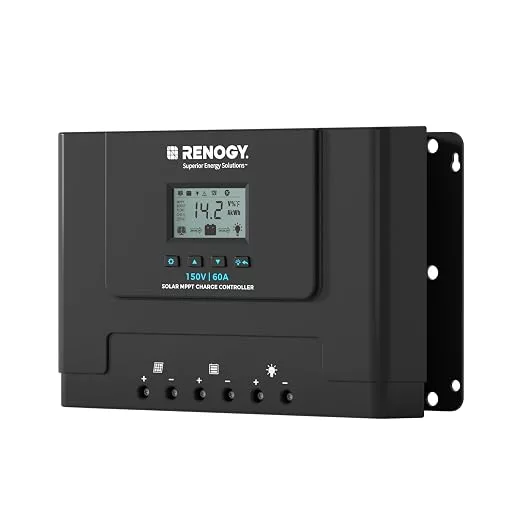
Renogy Rover Lite 60A
- 60 A rated charge current
- 150 V maximum PV input
- 12V/24V/36V/48V auto battery detection
- Built-in lithium low-temperature protection
Why it fits this plan: It runs well above the engine's 40 A recommendation, so a later panel expansion does not force a new controller. The 150 V ceiling also supports a longer series string than a 100 V unit.
Good for: a build that may add panels after the first season. Not for: a buyer who wants Bluetooth monitoring out of the box, because Bluetooth is not among the listing specs.
The 60 A rating is headroom, not a requirement for the 400 W plan. Buying it only makes sense if the roof and budget can grow later, and the separate Bluetooth module belongs in that decision.
EPEVER 40A MPPT: the exact-size pick
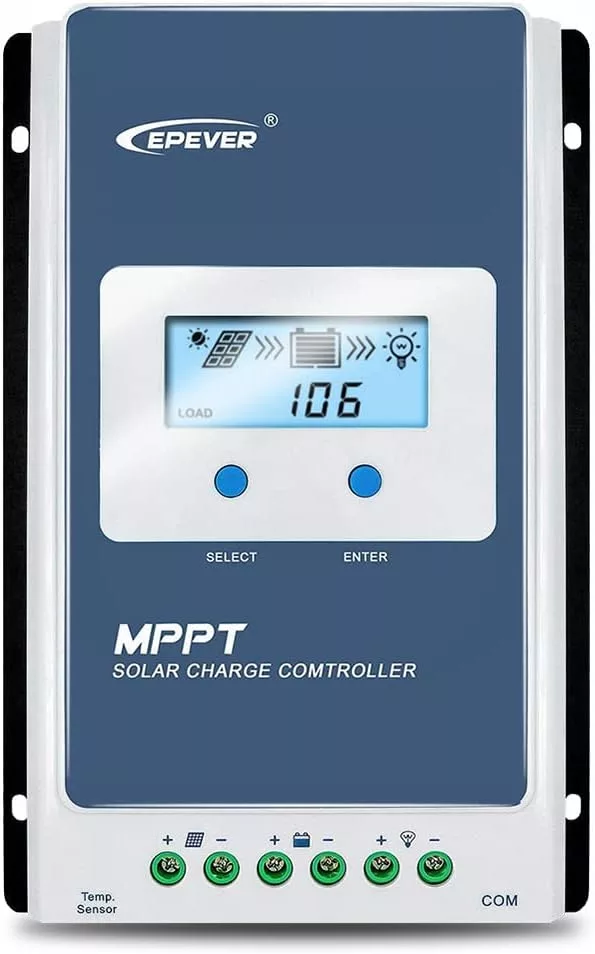
EPEVER 40A MPPT
- 40 A rated charge current
- 100 V maximum PV voltage
- 12V / 24V auto battery voltage
- LCD screen and lithium support
Why it fits this plan: It matches the engine's 40 A recommendation. The LCD shows charging data without a phone, which suits a simple van build.
Good for: a 400 W parallel array on a tight budget. Not for: a long series string, because the 100 V ceiling leaves less room above a cold open-circuit voltage than the 150 V units.
The 100 V limit is the honest trade-off here. It works for a parallel roof layout, but a series layout with a high cold voltage can run out of margin. Check the panel datasheet before you choose this one.
What does the 40 A rating actually mean?
A 40 A controller can pass up to 40 A of charge current to the battery, while this array’s charge current is 27.8 A. The extra room covers a cold, bright day and keeps the controller from clipping the array. A 60 A unit does the same job with more reserve, and a 40 A unit at the calculator number is enough for the plan as drawn.
Maximum PV voltage is a separate limit. It is the highest open-circuit voltage the controller accepts from the panels, and cold weather pushes that voltage up. A 100 V controller needs a parallel layout or a short series string, while a 150 V controller gives more room for series wiring. Neither number replaces the panel datasheet check.
Where should the controller live?
Our calculator plan calls for one controller, and its job is easier when the unit sits where air can move across the fins. A closed cabinet under a bed can trap heat, which pushes a controller to derate or throttle. Keep the run from the panels and the run to the battery short, leave room around the terminals, and follow the manual for clearance. If the only dry spot is far from the battery, fix that layout before you buy, because a longer run can change the cable size. The controller choice is secondary to a mounting spot you can service.
When is 400 W not enough?
Our calculator caps this large-van roof at 400 W and still shows a daily shortfall against the full-time loads. In Denver the capped array makes 2,099 Wh per day in July and falls 147.8 Wh short; in January it makes 778.3 Wh per day and falls 1,468.5 Wh short. In Berlin the January run makes 193.3 Wh per day and falls 2,053.5 Wh short. A 30 A DC-DC charger adds 460.8 Wh per day in this setup, and shore power can cover the rest on hookups, but only through a proper shore-power inlet, breaker and cable installed by a qualified electrician. That is why a van with Starlink and a laptop should plan the alternator or a hookup as part of the solar system, not as an afterthought.
The battery side needs one more check. The 1000 W inverter pulls 108.2 A DC at low battery, so the combined BMS rating of the two 280 Ah batteries must support that 108.2 A continuously. The cable and fuse follow the same current: 108.2 A × 1.25 = 135.3 A, so the inverter branch uses a 150 A Class T fuse. That protection needs a cable ampacity of at least 176.5 A (150 / 0.85, our 15% design margin rather than an ABYC rule). A 2 AWG cable carries 180 A at 90 °C and passes; 4 AWG does not reach that ampacity. A lower BMS rating is not enough even with larger cable, because the BMS trips first.
When can you skip buying?
Our calculator plan is a guide, not a sales quota. You can keep your wallet closed in a few honest cases.
- You already own a 40 A MPPT controller with a maximum PV voltage above the cold array voltage.
- Your roof has one small panel and a PWM controller already keeps the battery charged.
- Your roof layout is still changing, so the final controller size is not settled.
Frequently asked questions
Do I need a 40 A MPPT for a 400 W van array?
This plan does need 40 A. Our calculator gives 27.8 A of charge current, 34.7 A of required controller rating, and a 40 A recommendation for 2 × 200 W on a 12 V system.
Is a 60 A controller too big for a 400 W array?
A 60 A controller is not too big for the array, and it will simply run below its rating. It makes sense when you plan more panels later, but our calculator still treats 40 A as the size for this exact array.
What maximum PV voltage should I choose?
Choose a controller whose maximum PV voltage is above your array’s cold open-circuit voltage. The 150 V units leave more room for series strings, while the 100 V unit fits a parallel layout with a lower voltage ceiling.
Can these controllers charge a LiFePO4 bank?
All three listings include lithium support, and the Renogy listing also states low-temperature protection. Confirm the charge profile and the low-temperature setting in the manual before you connect a lithium bank.
What if my roof cannot fit 400 W?
Then plan the shortfall into the system. A 30 A DC-DC charger adds 460.8 Wh per day in this setup, and shore power covers the rest when you have a hookup, but only through a proper shore-power inlet, breaker and cable installed by a qualified electrician.
Run your own loads through the RV solar calculator to see the controller size for your own roof, then browse the solar category hub for the rest of the plan. The fridge solar guide shows how the array moves with loads, and the 280 Ah battery guide covers the bank side.