
· OhMyVan Team · Solar · 13 min read
How Many Solar Panels to Run a Fridge in a Van
A 45 W van fridge uses 378 Wh a day. The calculator says one 100 W panel covers Denver in summer and a 300 W bank covers winter, with the battery and MPPT to match.

- fridge
- how-many
- solar-panel
- mppt
- lifepo4
For a 45 W 12 V compressor fridge that runs 24 hours at a 35% duty cycle, the OhMyVan calculator puts daily energy at 378 Wh. In Denver the same fridge needs 250 W of solar in December through February, which the calculator rounds to a 3 × 100 W bank, and 100 W in June through August, which is one 100 W panel. A 100 Ah LiFePO4 battery covers two days of autonomy with 1024 Wh usable.
That answer is deliberately specific, because a single annual average hides the problem most van owners hit in winter. The same fridge, in the same van, needs three times the panel wattage in a Colorado winter as it does in summer. The rest of this guide shows the calculator output for both seasons, then adds the battery, MPPT, cable and fuse sizes for a full plan.
See our safety notes for details.
What does a 12V fridge use in a day?
The calculator starts from the fridge preset: 45 W of running draw, 24 hours of operation and a 35% duty cycle for the compressor. Those inputs produce 378 Wh per day. The duty cycle is the important part, because a compressor fridge does not draw its rated wattage all day.
The same preset is available in the RV battery amp-hour calculator, where you can change the watts, hours or quantity and watch the daily energy move. If your fridge is larger, runs in a hot van or gets opened all day, raise the duty cycle rather than guessing at a panel size.
How many solar panels does the fridge need in summer?
Denver in June through August has a worst-month peak sun value of 6.31 hours in the shared location table. With the calculator’s system efficiency, 378 Wh per day requires 79.86 W of panels, which the calculator rounds to 100 W. The practical bank is one 100 W panel.
The charge controller follows the array rather than the fridge. The calculator gives a 6.94 A charge current, a 8.68 A required rating and a 10 A MPPT recommendation, with an estimated harvest of 473.31 Wh per day. The full summer setup is already filled into the RV solar calculator.

How many panels does it need in winter?
Denver in December through February has a worst-month peak sun value of 2.29 hours. The same 378 Wh now requires 220.15 W of panels, and the calculator recommends 250 W. The panel bank is three 100 W panels for 300 W total, because the bank is built from standard panel sizes rather than a fractional panel.
The winter MPPT is larger too. The calculator gives a 20.83 A charge current, a 26.04 A required rating and a 30 A recommendation, with an estimated harvest of 429.26 Wh per day. You can open the winter solar setup and move the location or the months to see how quickly the bank changes.
London changes the winter answer in a way Denver does not. The calculator’s London summer case needs 120.41 W, which it rounds to a 150 W selection built from two 100 W panels for 200 W total, with a 470.88 Wh per day harvest. London winter needs 761.44 W, so the 800 W roof is the limit and the calculator selects four 200 W panels. That harvest is 397.14 Wh per day against the fridge’s 378 Wh per day, so it just covers the fridge. With only a sliver of reserve, a run of cloudy London days drains the battery fast, so the plan needs DC-DC charging from the alternator: the calculator’s 30 A DC-DC case adds 460.8 Wh per day, and shore power covers the rest when you are parked. The same fridge needs only 250 W in a Denver winter, which is why the location belongs in the calculation.
Do you need a battery as well?
Yes, because the panels only produce while the sun is up and the fridge runs overnight. For the fridge-only plan the calculator requires 80.25 Ah and recommends a 100 Ah LiFePO4 battery. That battery gives 1024 Wh of usable energy at the shared depth of discharge and round-trip efficiency, which works out to 2.49 days of autonomy at 378 Wh per day.
The battery calculation is separate from the solar calculation, and both are prefilled in the battery calculator. If you want three days of reserve, change the autonomy setting and the calculator returns a larger bank instead of a rule of thumb.
What if you add lights, a laptop and phones?
Most vans do not run a fridge alone. A typical small load list with the same fridge, one LED light, one laptop and two phones comes to 726 Wh per day, split into 486 Wh of DC loads and 240 Wh of AC loads. The inverter adds its own losses and idle draw, so the calculator’s DC-equivalent energy is 999 Wh.
That plan changes every downstream size. The calculator recommends a 300 W inverter with a 32.47 A DC draw, a 212.03 Ah battery requirement that rounds to a 230 Ah recommendation, and a 600 W solar array built as three 200 W panels. The MPPT recommendation rises to 60 A. The battery gear list then offers a 280 Ah unit, because the gear list chooses from the standard battery sizes rather than the exact recommended number.
The cable and fuse sizes come from the same run. The calculator puts the 300 W inverter DC draw at 32.47 A. The 1.25 fuse margin gives 40.58 A, so the standard inverter branch fuse is 50 A Class T at the positive busbar. The cable must carry that branch fuse with the 15 percent reserve, so its ampacity has to be above 50 A divided by 0.85. In the 90 °C ABYC table 10 AWG is the next smaller row and does not clear it, while 8 AWG at 70 A passes, with a 0.127 V drop and a 1.21% drop on the 3 ft one-way run. The battery main fuse is a separate calculation: the calculator uses the total discharge of 38.88 A and the 60 A MPPT charge current, takes the larger 60 A design current, requires 75 A and recommends an 80 A Class T fuse within 7 in / 18 cm of the battery. The battery main fuse is 80 A. The cable must carry it with the same reserve, so 8 AWG at 70 A fails and 6 AWG at 100 A passes, with a 0.131 V drop and a 1.09% drop on the 2 ft one-way run. You can reproduce each step in the 12 V wire size calculator and the DC fuse size calculator.
The diagram below shows the charging path from the 3 × 200 W array through the 60 A MPPT and its 80 A MIDI charge fuse to the 12 V 280 Ah battery, with the 80 A Class T main fuse at battery +.
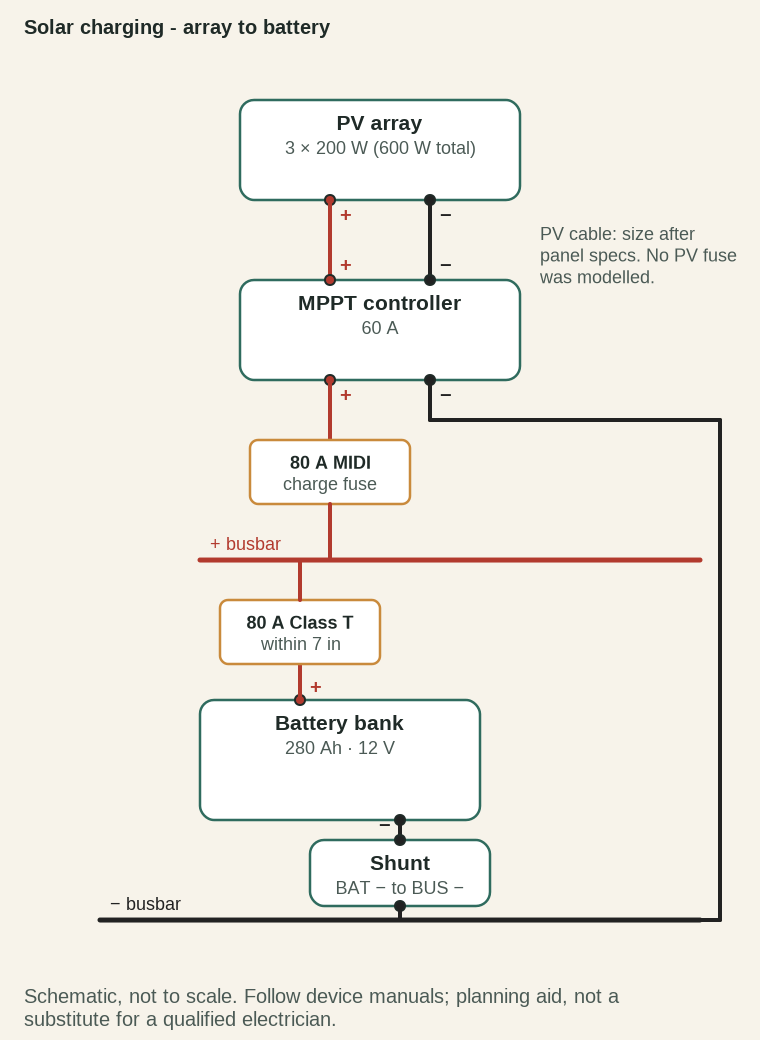
Solar charging path: 3 × 200 W array, 60 A MPPT, 80 A MIDI charge fuse, 80 A Class T main fuse and a 12 V 280 Ah battery.
Why does the same fridge need three times the solar in winter?
The difference is the peak sun value, not the fridge. Denver gives 6.31 hours in summer and 2.29 hours in winter, and the calculator always uses the worst month in the selected travel window. A winter array therefore has to make up the same daily energy from less than half the sun, which is why the recommendation moves from 100 W to 250 W and the panel bank from one panel to three.
This is the point most panel-count articles skip. They divide daily watt-hours by one annual sun number, then present the result as if it works all year. If you travel in summer, the smaller array is honest. If you ski, chase winter sun or stay in the mountains, plan the winter number and accept the extra roof space. If the battery sits below freezing, LiFePO4 charging needs a heated battery or a BMS that blocks charging until the cells warm up.
What should you check before you buy panels?
Roof space is the first practical limit, and the calculator’s vehicle setting caps the array at the roof allowance you choose. Measure the clear area between vents, hatches and roof rails before you fall in love with a panel count, because three large panels can be harder to fit than five smaller ones. Shading matters as much as total watts, and a single shaded cell can pull down a whole string more than the nameplate suggests.
Before buying, check that your panels’ cold-weather Voc is below the controller’s max input voltage, and the OhMyVan app checks this when you enter the panel specs. The third check is the DC side: cable ampacity, fuse rating and the distance from the battery to the fuse all belong in the same plan, and the app carries the full wiring list when you want to compare it with a shop quote.
Which panels, MPPT and fuses fit this plan?
The gear list shows the same plan as shopping categories, with the web tag already applied. For the typical van setup it gives three 200 W panels, a 60 A MPPT, a 280 Ah LiFePO4 battery, a 300 W inverter, a 6 AWG battery main cable with an 80 A Class T main fuse, and an 8 AWG inverter branch cable with a 50 A Class T inverter branch fuse. The main fuse belongs within 7 in / 18 cm of the battery, while the inverter branch fuse sits at the positive busbar, and each cable must be rated for its fuse.
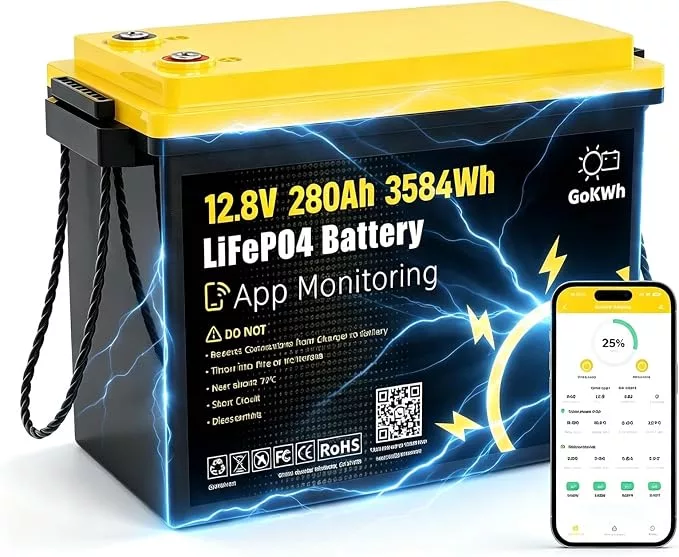
GoKwh 12V 280Ah
- 280 Ah at 12.8 V, 3584 Wh
- 200 A BMS with Bluetooth app
- 58 lb, 15.27 × 9.84 × 7.59 in
- Low-temperature discharge protection below -20 °C
Why it fits this plan: the engine's gear list asks for a 280 Ah 12 V LiFePO4 battery, and this listing is exactly that capacity with a 200 A BMS.
Good for: a single-battery 280 Ah bank with phone monitoring. Not for: charging below freezing without extra protection, because the listing states low-temperature discharge protection, not a charge cutoff.
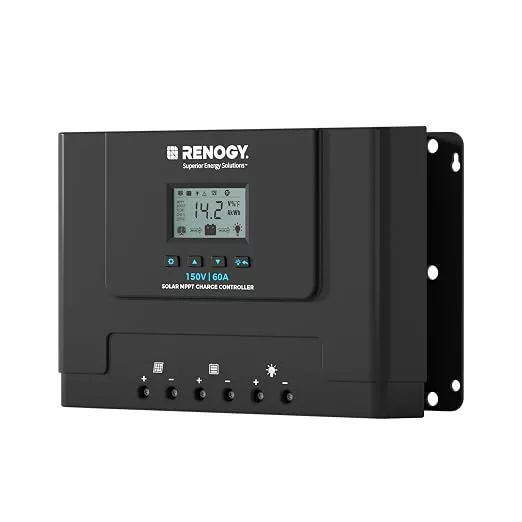
Renogy 60A MPPT
- 60 A rated charge current
- 150 V maximum PV input
- 12/24/36/48 V auto detection
- Gel, sealed, flooded and lithium battery support
Why it fits this plan: the engine recommends a 60 A MPPT for the 600 W array, and this controller matches that current with a 150 V input ceiling.
Good for: a 12 V or 24 V van array that stays under 150 V cold Voc. Not for: buyers who want Bluetooth included, because the BT2 module is sold separately.
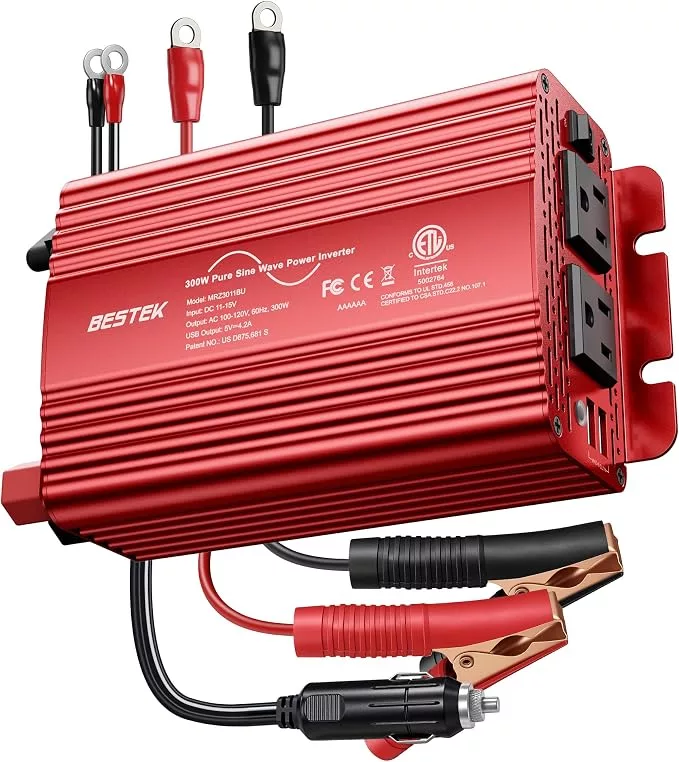
BESTEK 300W Pure Sine
- 300 W continuous output
- 12 V DC input
- 110 V AC output
- Pure sine wave
Why it fits this plan: the engine sizes a 300 W inverter for the laptop and phone loads, and this listing matches the wattage.
Good for: a laptop, phone chargers and other small AC loads. Not for: a microwave, induction cooktop or air conditioner, which need a much larger inverter and cable.
Search links for the rest of the plan, since the exact roof panel, fuse and cable depend on the final layout:
If your inverter or fuse holder manual asks for a larger fuse or cable than the calculator recommends, the manual wins, and the cable has to be rated for that larger fuse. The app uses the same calculator and the full wiring plan when you are ready to compare products on a phone, and more guides are in the Solar category hub and the OhMyVan blog.
Frequently asked questions
How many solar panels do I need for a 12V fridge?
In Denver, one 100 W panel covers a 45 W fridge in summer and three 100 W panels cover it in winter. The number depends on the location and travel months, so change those in the solar calculator and use the calculator’s new bank.
Will a 100W panel run a 12V fridge?
A 100 W panel covers the 378 Wh daily load in a Denver summer, where the calculator estimates 473.31 Wh per day. The same panel falls short in winter, where the calculator recommends a 250 W array and a 300 W bank.
How long will a 100Ah battery run a fridge?
The calculator gives 1024 Wh usable from a 100 Ah LiFePO4 battery and 2.49 days at 378 Wh per day. That assumes the shared depth of discharge and round-trip efficiency, so a different battery specification changes the answer.
Can I run a fridge on solar without a battery?
No, because the panels stop producing after sunset while the fridge keeps cycling overnight. The battery carries the night load and the solar replaces the energy the next day.
Do I need a fuse between the battery and the fridge?
Use the fuse size from the calculator and never a larger fuse than the cable is rated for. If a device manual asks for a larger fuse, the cable must be sized for that fuse. The fridge branch belongs in a DC fuse block, and its fuse should match the fridge manual and the wire that feeds it, while the battery main fuse and the inverter branch fuse stay separate roles in the same calculator plan.