
· OhMyVan Team · Batteries · 10 min read
Best 12V 280Ah Lithium Battery for a Van
Four real 280 to 320 Ah LiFePO4 batteries for a van, checked against the OhMyVan calculator plan: 12 V, at least 280 Ah, 200 A BMS, and honest cold-weather limits.

- battery
- lifepo4
- buying-guide
- sizing
More battery guides are in the Batteries category hub. A 280 Ah LiFePO4 battery is one of the standard sizes the OhMyVan gear list offers for a two-day van plan, above the 230 Ah the calculator recommends for a typical fridge, laptop and phone load. The four batteries below are real Amazon listings checked on 18 November 2026. Each one is 12 V LiFePO4, at least 280 Ah, and has a 200 A BMS. None of them is a hands-on test, and none of them is a promise that a budget BMS will behave like a premium one.
See our safety notes for details.
Quick picks
| Pick | Battery | Key spec | Check |
|---|---|---|---|
| Best exact 280 Ah | GoKwh 280 Ah | 280 Ah, 3584 Wh, 200 A BMS | Check on Amazon |
| Best extra reserve | GoKwh 320 Ah | 320 Ah, 4096 Wh, 200 A BMS | Check on Amazon |
| Best mid-size | EnerVast 300 Ah | 300 Ah, 3840 Wh, 200 A BMS | Check on Amazon |
| Best cold-charge listing | ATE Power 300 Ah | 300 Ah, low-temperature charging protection | Check on Amazon |
What does the calculator actually ask for?
The battery side of the calculator starts with daily energy. The typical van setup in this guide uses a compressor fridge, one LED light, a laptop and two phones, which comes to 998.73 Wh of DC-equivalent energy per day after inverter losses and idle draw. With two days of autonomy, the calculator requires 212.03 Ah and recommends a 230 Ah LiFePO4 battery. That recommended bank gives 2355.2 Wh of usable energy and 2.17 days at the daily load.
A 280 Ah battery is not required for that exact plan, and that is the honest starting point. It is a sensible upgrade when you want more reserve for cloudy days, a second user, or a future inverter load, and it is one of the standard sizes the gear list shows. If your own load list is larger, run it through the RV battery amp-hour calculator before you buy, because the battery should follow the load rather than the other way around.
The same setup also sizes the protection around the battery. The calculator recommends a 6 AWG battery main cable and an 80 A Class T main fuse. A larger battery does not change those numbers by itself; a larger charger or inverter does. Keep the whole plan together instead of buying a battery in isolation.
The BMS needs its own check. Three listings state a 200 A BMS and the ATE Power lists a 200 A to 300 A range. For the 300 W inverter in this plan the calculator’s full-load DC draw is 32.47 A, so any of them is enough. For a 2000 W inverter the 12 V plan pulls 216.45 A, and a 200 A BMS is not enough for that, because it will trip before the cable is stressed. The ATE Power only clears 216.45 A if the delivered BMS is the 300 A version, so verify the label. The 2000 W inverter wire guide shows the full plan.
The diagram below shows the single 280 Ah 12 V battery with its 80 A Class T main fuse and 6 AWG main cable.
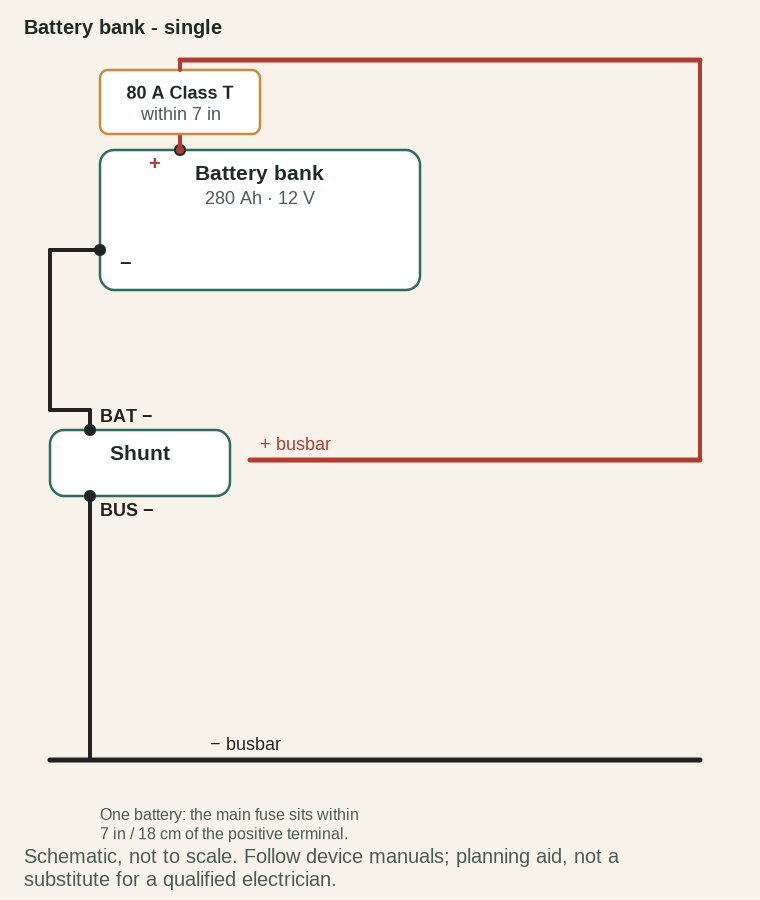
Single 280 Ah 12 V bank with the 80 A Class T main fuse and 6 AWG main cable.
How we compared them
We compared the live listing specifications, not review scores and not prices. The four things that decide a van battery are usable capacity, continuous BMS current, physical size and weight, and what the BMS does when the battery gets cold. A 200 A BMS is the common thread here because it gives a reasonable continuous discharge margin for a 12 V van bank and keeps the battery from being the first bottleneck when a 300 W inverter or a modest DC load runs.
The cold-weather column is where the listings differ. A low-temperature discharge cutoff protects the battery from discharge below the stated limit, but it does not by itself stop charging at freezing. For a winter build, ask for a charge cutoff or a heated battery, and treat a “low temp protection” line as incomplete until the listing says which direction it protects.
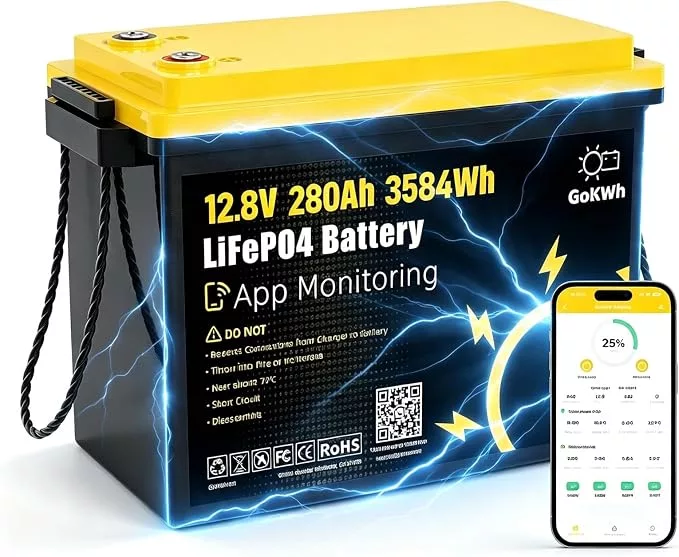
GoKwh 12V 280Ah
- 280 Ah at 12.8 V, 3584 Wh
- 200 A BMS with Bluetooth app
- 58 lb, 15.27 × 9.84 × 7.59 in
- Low-temperature discharge protection below -20 °C
Why it fits this plan: this is the exact 280 Ah 12 V LiFePO4 size in the engine's gear list, with a 200 A BMS and a compact case for a van bench.
Good for: a single-battery bank with phone monitoring and a known 280 Ah footprint. Not for: charging below freezing without a heater or a BMS charge cutoff, because the listing states low-temperature discharge protection rather than a charge cutoff.
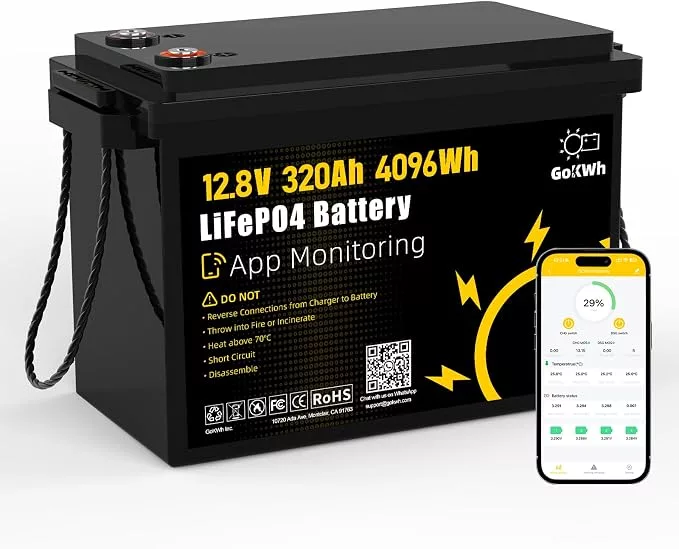
GoKwh 12V 320Ah
- 320 Ah at 12.8 V, 4096 Wh
- 200 A BMS with Bluetooth app
- 55 lb
- Low-temperature cut-off below -20 °C during discharge
Why it fits this plan: it is the same battery family as the 280 Ah pick, with more reserve for the same 12 V system and a slightly lower listed weight.
Good for: a van that wants extra days of reserve without adding a second battery. Not for: a build that needs a documented charge cutoff, because the listing states a discharge cut-off rather than a charge cutoff.
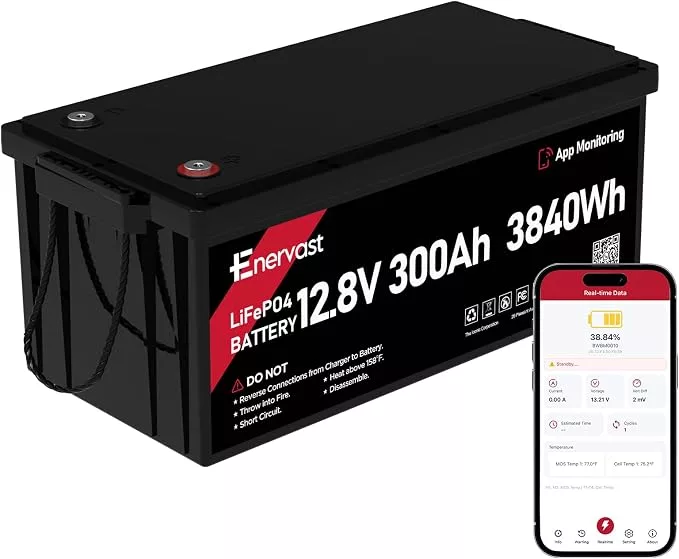
EnerVast 12.8V 300Ah
- 300 Ah at 12.8 V, 3840 Wh
- 200 A BMS with app monitoring
- Low-temperature protection listed
- 4,000+ cycles at 100% DoD (listing)
Why it fits this plan: a 300 Ah bank sits between the exact 280 Ah size and the larger 320 Ah option, and the listing includes app monitoring and low-temperature protection.
Good for: a mid-size bank that leaves room for a second battery later. Not for: anyone who needs a documented charge cutoff, because the listing does not spell out whether the low-temperature protection covers charging as well as discharge.
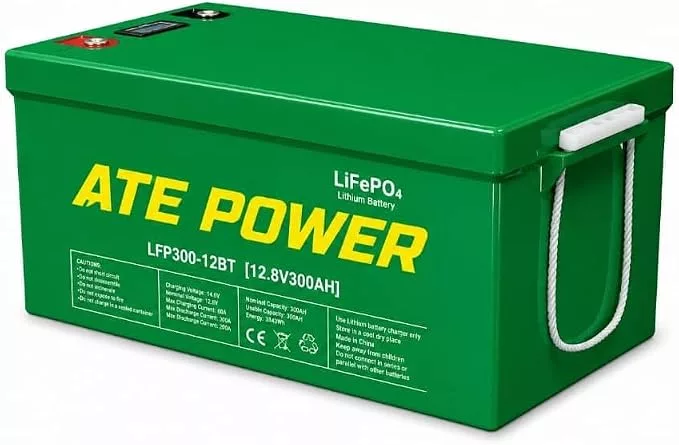
ATE Power 12V 300Ah
- 300 Ah at 12 V
- 200 A to 300 A BMS (listing)
- Low-temperature charging protection
- IP65 enclosure, 29 kg / 64 lb
Why it fits this plan: it is the one card here whose listing states low-temperature charging protection, which matters for a van that sees freezing nights.
Good for: a winter build that needs a documented charge limit and a sealed enclosure. Not for: a weight-sensitive build, because the 64 lb listed weight is heavier than the 58 lb and 55 lb picks.
Side-by-side specs
| Battery | Capacity | Energy | BMS | Cold-weather note | Listed weight |
|---|---|---|---|---|---|
| GoKwh 280 Ah | 280 Ah | 3584 Wh | 200 A | discharge protection below -20 °C | 58 lb |
| GoKwh 320 Ah | 320 Ah | 4096 Wh | 200 A | discharge cut-off below -20 °C | 55 lb |
| EnerVast 300 Ah | 300 Ah | 3840 Wh | 200 A | low-temperature protection listed | not listed |
| ATE Power 300 Ah | 300 Ah | not listed | 200 to 300 A | charging protection stated | 64 lb |
When you can skip buying
If your current bank already covers two days at your real load, the calculator’s 230 Ah recommendation is the cheaper answer and a 280 Ah battery is not an upgrade you need. If you mostly drive and camp with hookups, a DC-DC charger or a shore-power charger may be a better place to spend the money than extra amp-hours. If you only need one more night of reserve, a second small battery can be worse than one larger battery because parallel batteries need matched age, model and chemistry, plus a fuse at each battery positive.
The honest skip verdict is simple. Buy a new 280 Ah battery when the load list has outgrown the current bank or when the current battery cannot supply the inverter current without the BMS cutting out. Do not buy one just because 280 Ah sounds like a bigger number.
What to check in the battery box
Measure the case before you order, because a 280 Ah battery is not a drop-in replacement for a small AGM box. The GoKwh 280 Ah listing gives 15.27 × 9.84 × 7.59 in and 58 lb, and the 320 Ah version is larger even though its listed weight is lower. Leave room for the terminals, the class T fuse holder, a disconnect switch and the cable bend radius, and remember that a heavy battery needs a restrained tray rather than a shelf that only looks strong.
Check the BMS current against the inverter, not just the amp-hour rating. The calculator’s 300 W inverter draws 32.47 A, which is well inside a 200 A BMS, but a much larger inverter would change that calculation and the cable and fuse with it. Check the charger profile too, because the recommended charge current has to match the battery charge limits, not the number on the battery case.
How we picked
We compared the live listing specifications and the calculator’s battery requirement rather than testing these batteries ourselves. Each pick is 12 V LiFePO4, at least 280 Ah, and has a 200 A or larger BMS, and the card notes the cold-weather wording the listing actually uses. Prices, stock and even BMS firmware change, so confirm the current details on the listing before you buy.
FAQ
Is 280Ah enough for a van?
For the typical fridge, laptop and phone plan in the calculator, the 230 Ah recommendation already gives 2.17 days, so 280 Ah adds reserve on top of that. A larger load list can need more, so run the actual list before choosing.
Can I put two 280Ah batteries in parallel?
You can, but both batteries should be the same model, chemistry and approximate age, and each battery positive needs its own fuse. Do not mix an old AGM with a new LiFePO4, and do not mix two different lithium models in one bank.
Do I need low-temperature protection?
You need a BMS that blocks charging below freezing, or a heated battery, if the van will charge in winter. A listing that only says low-temperature discharge protection does not prove the charging side is protected.
What charger and MPPT fit a 280Ah bank?
The 280 Ah gear item does not require a larger MPPT by itself; the array and the load decide that. The battery current in this plan stays within the 200 A BMS.
Can I reuse my old charger?
Check the charger voltage and current against the new battery manual first. A charger that was correct for AGM may not have the LiFePO4 profile or the current the new bank can accept, and the battery manual wins over a generic setting.